The Anti-Bloat Diet After 50: What to Eat (and Avoid)
A functional nutritionist's practical guide to reducing bloating after 50 — the foods that help, the ones that quietly make it worse, and a sample day.

Contents
Bloating is one of the most common complaints we hear from women in their 50s, and it’s also one of the most dismissed — often chalked up to “just getting older.” The research says otherwise: bloating in this age group has identifiable, addressable drivers, and diet is the most direct lever you have.
Why Bloating Gets Worse After 50
Three overlapping factors tend to be at play: gut motility naturally slows with age, stomach acid production can decline, and gut bacteria diversity shifts. Each of these on its own would cause mild digestive discomfort — together, they compound into the persistent bloating so many women describe.
Foods That Help
- Fermented foods (plain yogurt, kefir, sauerkraut, kimchi) — introduce beneficial bacteria strains directly
- Cooked, not raw, cruciferous vegetables — broccoli and cauliflower are nutrient-dense but harder to digest raw; cooking breaks down some of the fiber that causes gas
- Soluble fiber (oats, chia, cooked carrots) — feeds beneficial bacteria without the harsh fermentation that insoluble fiber can cause
- Ginger and peppermint — both have research support for reducing bloating and improving gut motility
- Water, consistently through the day — dehydration slows digestion and worsens constipation-related bloating
Foods That Quietly Make It Worse
- Carbonated drinks — the gas has to go somewhere, and it’s usually your stomach first
- Raw cruciferous vegetables in large amounts — great for you, but fermentable enough to cause real discomfort for a sensitive gut
- Sugar alcohols (in many “sugar-free” products) — poorly absorbed and a common, underrated cause of bloating
- Large, late meals — digestion slows in the evening for most people, and a big meal close to bedtime has less time to move through
- Excess sodium — contributes to water retention, which reads as “bloat” even when it isn’t strictly digestive
“I tell clients to think of it as feeding the bacteria you want more of, not just avoiding trigger foods. Fermented foods and soluble fiber do more heavy lifting than most people realize.” — Emma Tate, FMN
A Sample Day
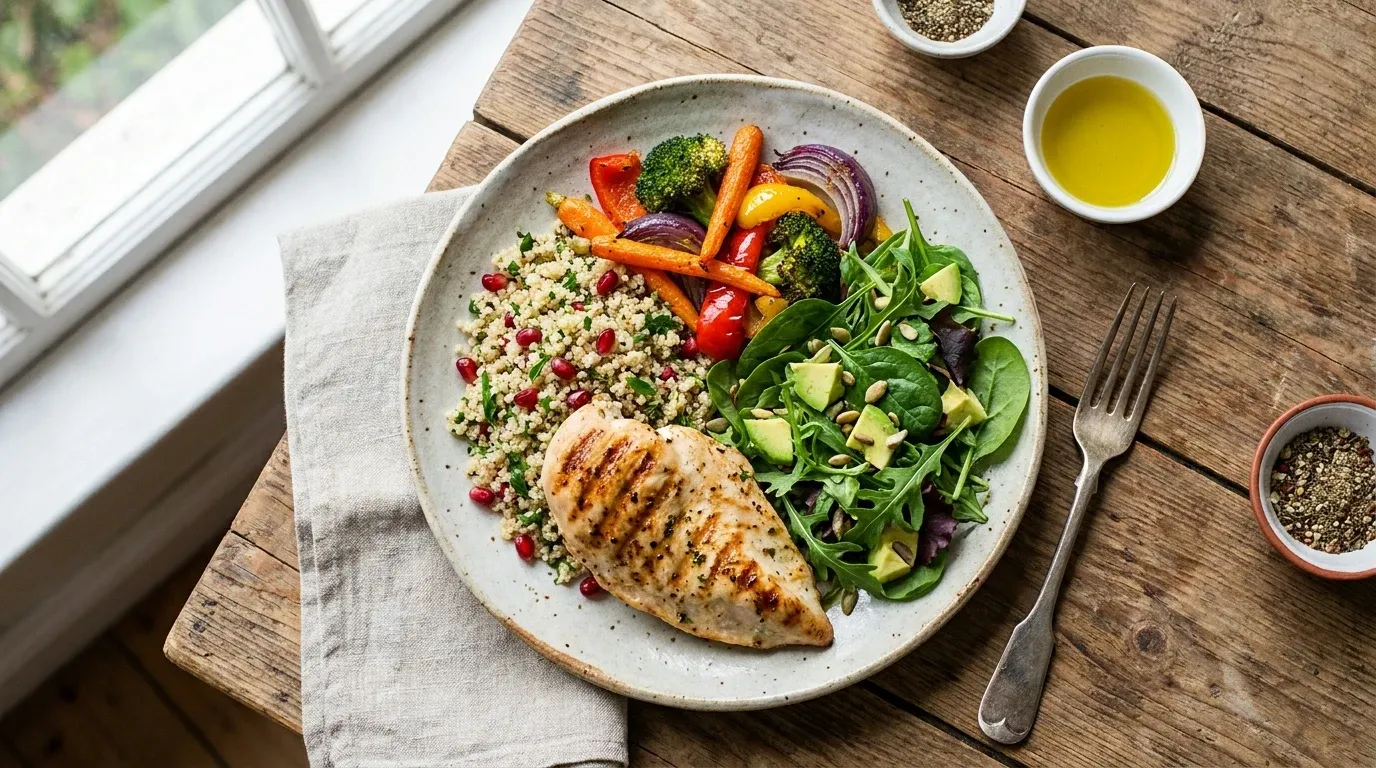
Morning: Plain kefir or yogurt with a spoon of chia seeds and cooked berries. Midday: A protein source with cooked vegetables and a small portion of rice or quinoa. Afternoon: Ginger tea, a small handful of nuts. Evening: A lighter meal, finished at least 2-3 hours before bed, with a fermented side like sauerkraut or kimchi.
Some readers pair these dietary changes with a targeted probiotic supplement for additional gut support — we cover what to actually look for in a probiotic in our strain-by-strain guide.
This article is for informational purposes only and does not constitute medical advice. Persistent or severe digestive symptoms should be evaluated by a healthcare professional.
Frequently asked questions
How long before dietary changes reduce bloating?
Is bloating after 50 always digestive?
More in Nutrition

Why Your Energy Crashes Every Afternoon (It's Not Just Caffeine Wearing Off)
The 2-4pm slump has less to do with your coffee schedule than most people think. Here's what the research says is actually driving it — and what helps.
How Much Protein Do Women Actually Need After 40?
Standard protein guidelines were largely built around younger adults. Here's what more recent research says women over 40 actually need to preserve muscle.

Menopause and Weight Gain: Why It Happens and What Actually Helps
It's not just 'slowing down.' Here's what the research says actually drives weight changes around menopause, separate from calories in and calories out.
Leave a comment
Comments are moderated before they appear.